 Germany
 Austria
 Belarus
 Belgium
 Bosnia and Herzegovina
 Bulgaria
 Croatia
 Czech Republik
 Denmark
 Finland
 France
 Georgia
 Great Britain
 Hungary
 Ireland
 Latvia
 Lithuania
 Netherlands
 Poland
 Portugal
 Romania
 Serbia
 Slovakia
 Spain
Spain
 Sweden
 Switzerland
 Ukraine
 Ethiopia
 Ghana
Ghana
 Egypt
Egypt
 Guinea
 Israel
 India
India
 Kazakhstan
 Malaysia
 Singapore
 United Arab Emirates
 Vietnam
 Taiwan
 Philippines
 New Zealand
 Australia
 Canada
 Brazil
 Paraguay
 Uruguay
 Bolivia
 Chile
Chile
 Peru
Peru

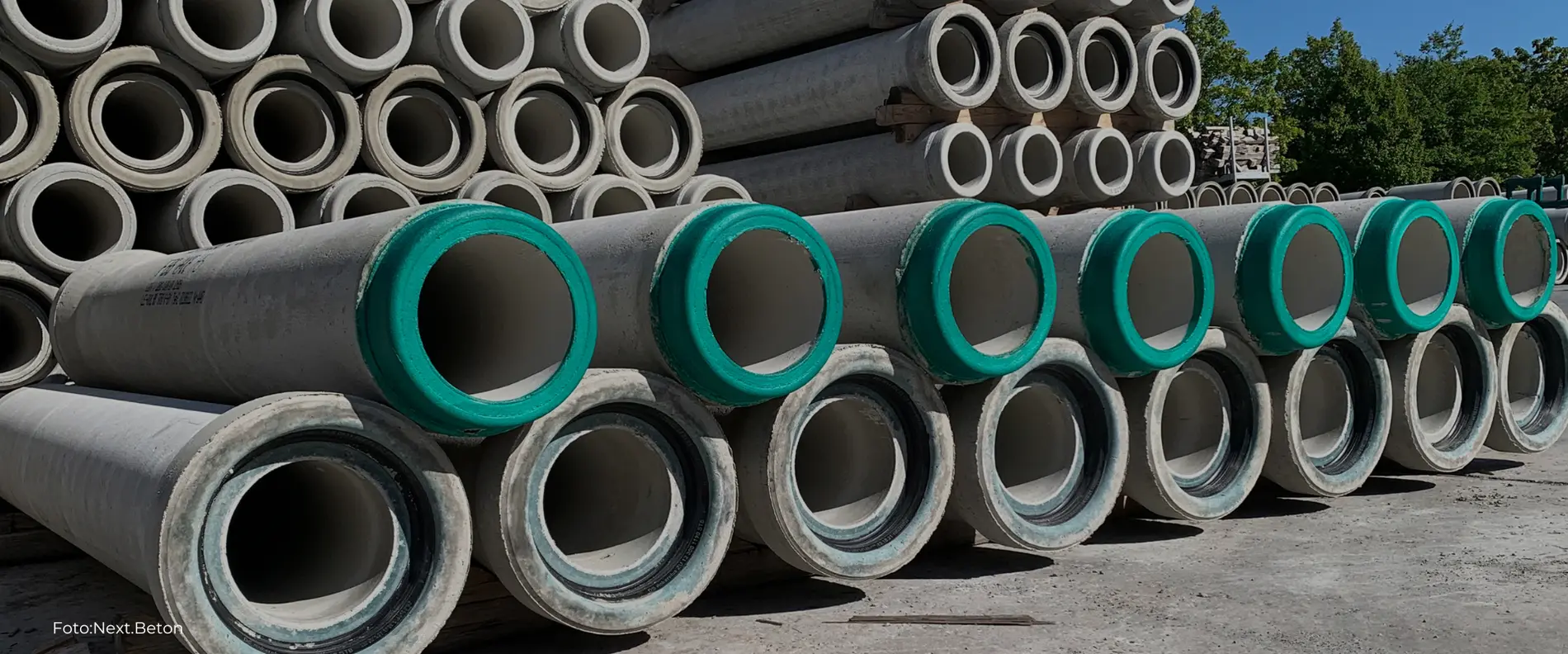
EPD for cement-free Earth Friendly Concrete
EPD for cement-free Earth Friendly Concrete
First German EPD for approved, cement-free concrete
18 Jun 2026
The Cement-free Earth Friendly Concrete (EFC) has received its first official Environmental Product Declaration (EPD) in Germany. This means that it is not only approved by the German Institute for Building Materials Technology (DIBt) for its outstanding technical properties, but also achieves a CO₂ reduction of ≥ 60 per cent in strength class C50/60 compared with the industry benchmark.
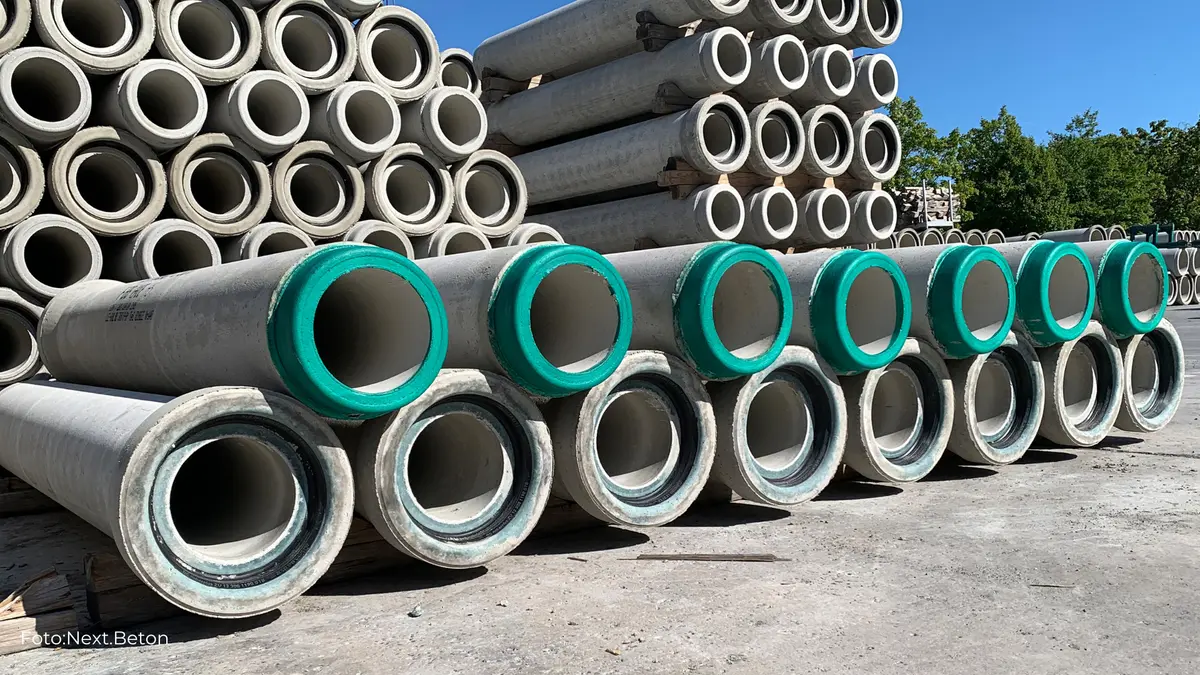
To assess CO₂ savings in concrete, industry benchmarks are used as comparative values. For strength class C50/60, assuming concrete made from pure Portland cement, the value of 325 kg CO₂/m³ can be used as a benchmark. The value of 122 kg CO₂/m³, confirmed by the EPD as A1-A3, therefore represents a potential CO₂ saving of approximately 62 per cent. Thanks to this combination of approval and sustainability, EFC can now also be used in very demanding applications, such as in exposure class XA3. In principle, EFC is suitable for almost all standard concrete applications: from earth-moist to flowable (F5 consistency) precast elements, as well as for use as ready-mixed concrete.
CO₂-reduced concrete
EFC is a concrete that is produced entirely without cement. Instead, alternative binders are used that do not react with water on their own. Special activators developed by MC-Bauchemie allow to work in the same way as conventional cement.
By eliminating cement from the mix, the CO₂ emissions associated with concrete production can be reduced by up to 75%. At the same time, the concrete exhibits improved chemical resistance, making it particularly durable and long-lasting.
RELATED CONTENT
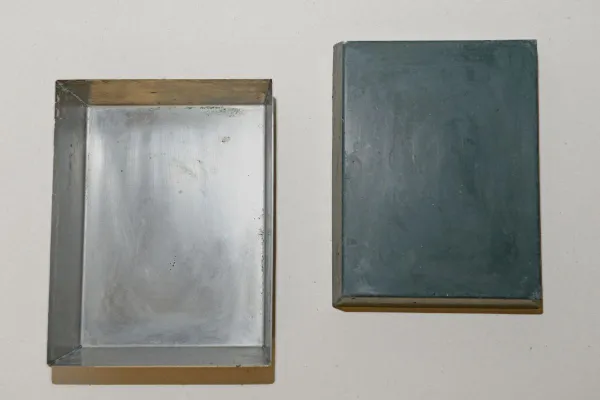
New release agent for climate-friendly concrete
Sustainable solutions are becoming increasingly important in the construction industry. As a result, demand is growing for construction chemicals that are compatible with innovative…
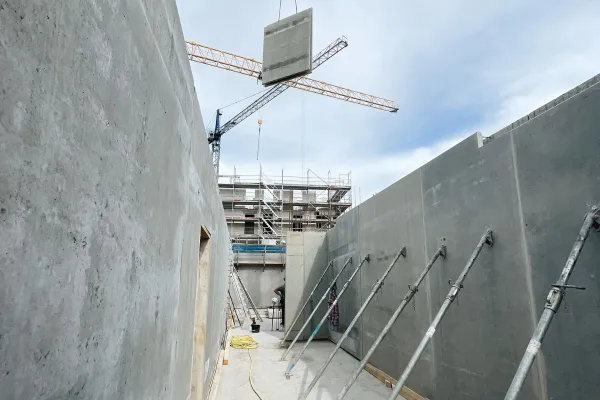
Geopolymer concrete for climate-compatible residential building
In Norderstedt, Germany, 71 climate-friendly social housing units are being built as part of the UBS4 project. The buildings feature a timber frame mounted on a geopolymer concrete…
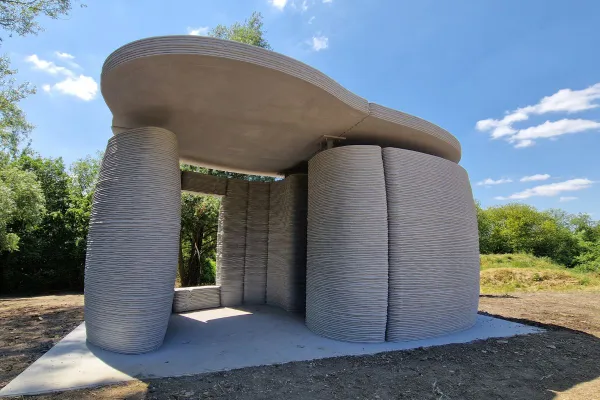
First cement-free concrete “Tiny House” of 3D-printed parts
The first 3D-printed modular building made of cement-free concrete has been built in Beckum, Westphalia (Germany), marking the culmination of an innovative project that underlines the…
More
