 Germany
 Austria
 Belarus
 Belgium
 Bosnia and Herzegovina
 Bulgaria
 Croatia
 Czech Republik
 Denmark
 Finland
 France
 Georgia
 Great Britain
 Hungary
 Ireland
 Latvia
 Lithuania
 Netherlands
 Poland
 Portugal
 Romania
 Serbia
 Slovakia
 Spain
Spain
 Sweden
 Switzerland
 Ukraine
 Ethiopia
 Ghana
Ghana
 Egypt
Egypt
 Guinea
 Israel
 India
India
 Kazakhstan
 Malaysia
 Singapore
 United Arab Emirates
 Vietnam
 Taiwan
 Philippines
 New Zealand
 Australia
 Canada
 Brazil
 Paraguay
 Uruguay
 Bolivia
 Chile
Chile
 Peru
Peru


Sustainability
Construction with 100% recycled concrete
Sustainability
Construction with 100% recycled concrete
School Building constructed with concrete with 100% recycled aggregate
5 Jun 2024
OTTO WULFF Bauunternehmung GmbH has erected on its company premises in Hamburg its first ‘model build’ largely made of recycled concrete. The concrete technology expertise of MC-Bauchemie was also called upon for this project. Following this successful test, a school building in the city of Hamburg has now been constructed using 100% recycled concrete for the first time – a showcase project for sustainable construction.
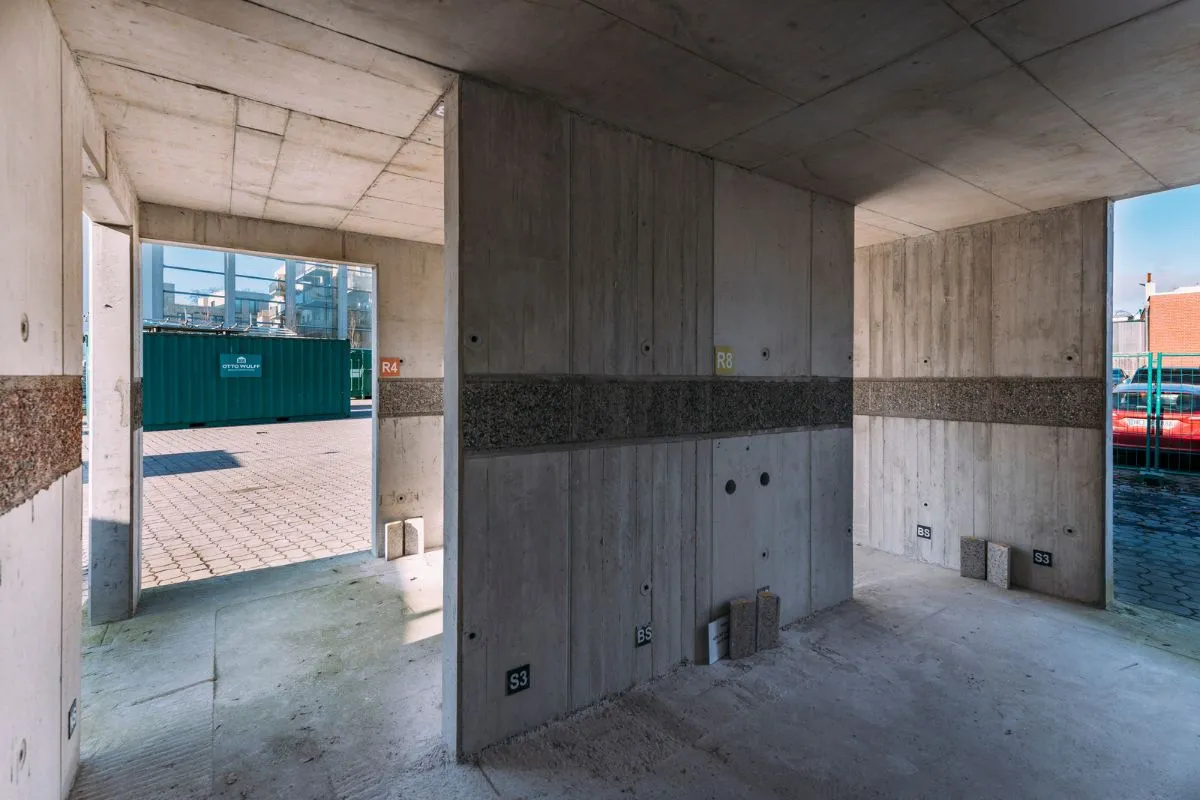
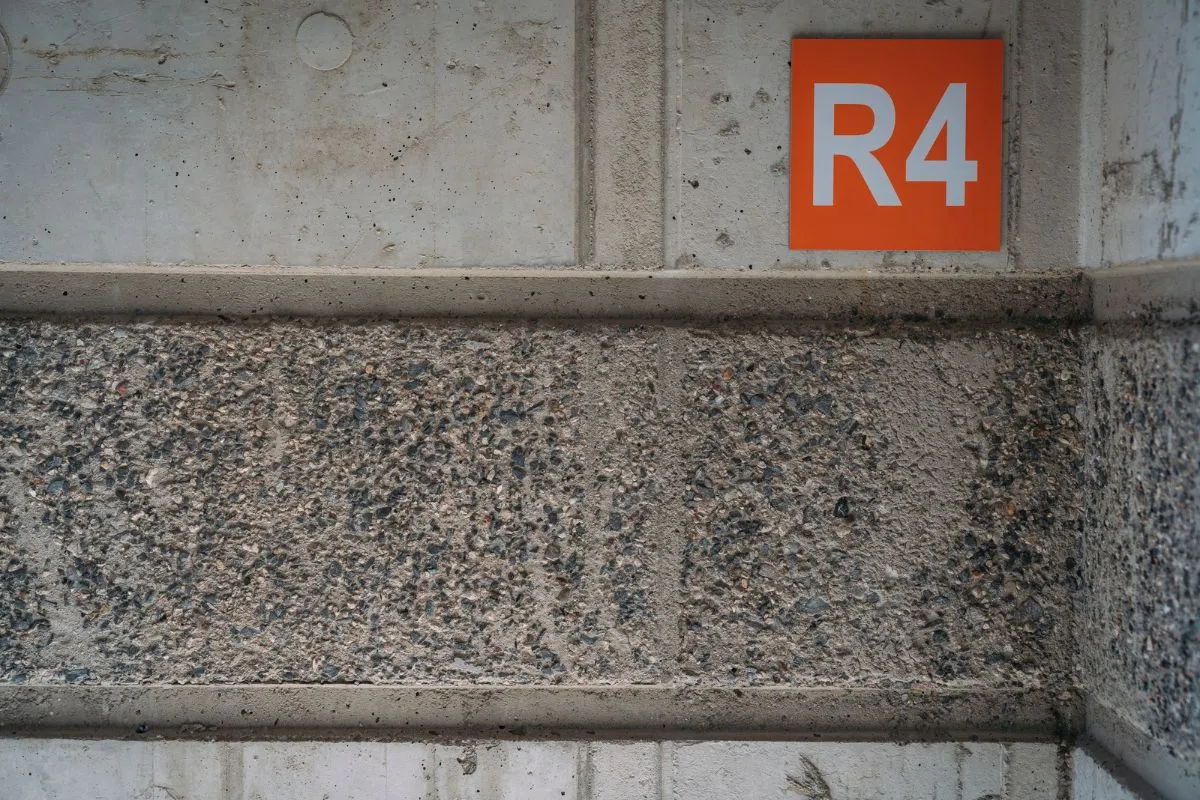
Celebrated on 12 February 2024, the topping-out ceremony for a new three-storey school building in Hamburg-Eilbek also marked the public premiere of a concrete with 100% recycled aggregate. This is the result of several years of research and development work by OTTO WULFF with a team of partners from Hamburg University of Science and Technology, the Hamburg Senate Chancellery and the Construction Competence Centre, OTTO DÖRNER Kies und Deponien, EGGERS Tiefbau, and e-hoch-3 eco impact experts. The aim is to promote the use of recycled concrete (hereafter: R-concrete) in resource-efficient construction. The project is part of the EU programme ‘Circular Construction in Regenerative Cities’ (CIRCuIT), which is examining circular economy approaches for the construction industry.
The optimised formulation for recycled concrete
When producing R-concrete, the main challenge is to achieve good workability and long-lasting consistency (slump retention) in the concrete for transport. Due to the fine grain content, it requires significantly more water than normal concrete. OTTO WULFF therefore brought Hamburg-based ready-mix concrete manufacturer Lebbin Beton, technical inspectorate ABN Gesellschaft für Baustoffüberwachung Nord mbH and MC-Bauchemie on board to solve this problem. Initially, various formulations with recycled aggregates were tested. A recipe with the concrete plasticiser Centrament N9 and MC-PowerFlow evo 530, a flow promoter from MC’s latest generation of superplasticisers, proved to be the best solution. The recycled concrete was successfully used for the first time in the ‘model build’ on the OTTO WULFF company premises, and has now been successfully applied in the construction of a new school building in Hamburg. The R-concrete is used for floor slabs and walls and can be applied and compacted on the construction site just as easily as conventional concrete. As the concrete consists of 100% recycled material and is not standardised, approval was required from the Hamburg building inspectorate on a one-off basis – an effort that was well worthwhile, given that both the construction outcome and the ecological balance cannot fail to impress.
Benefits of recycled concrete
The use of recycled aggregates in concrete production has many advantages. The consumption of primary resources such as natural stone and gravel can be reduced, as can the amount of waste material that has to be disposed of in landfill sites. Gravel and sand are also becoming increasingly scarce. Against this backdrop, transporting these bulk materials from other countries makes little sense, especially when Germany already has sufficient quantities of used materials that are simply dumped. The projects implemented by OTTO WULFF impressively demonstrate the possibilities and advantages of building with 100% R-concrete. Thanks to close cooperation between the project partners and MC-Bauchemie, a pioneering example for circular economy in the construction industry and for sustainable construction has been successfully achieved.
Related Products


RELATED CONTENT
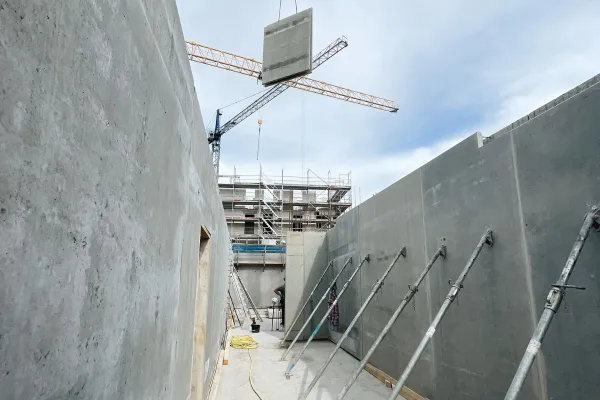
Geopolymer concrete for climate-compatible residential building
In Norderstedt, Germany, 71 climate-friendly social housing units are being built as part of the UBS4 project. The buildings feature a timber frame mounted on a geopolymer concrete…
New sustainability page is online
We have launched a sustainability page on our website where you can find information in different subheadings about the role sustainability plays at MC. Furthermore, you learn how we…
Climate-kind concrete - A key building block for the future
Sustainably effective concepts are becoming increasingly in demand worldwide as a means to mitigate climate change. In the field of construction, too, there are important contributions…
More
