Bosnian and Herzegovina
In the Bosnian city of Gradačac, an important cultural and historical structure has been sustainably secured: the foundation base of the historic tower was stabilised using modern injection technology from MC-Bauchemie to ensure long-term load-bearing capacity and durability.
Name
Soil stabilisation secures historic tower complex
Country
Bosnian and Herzegovina
Categories
Products
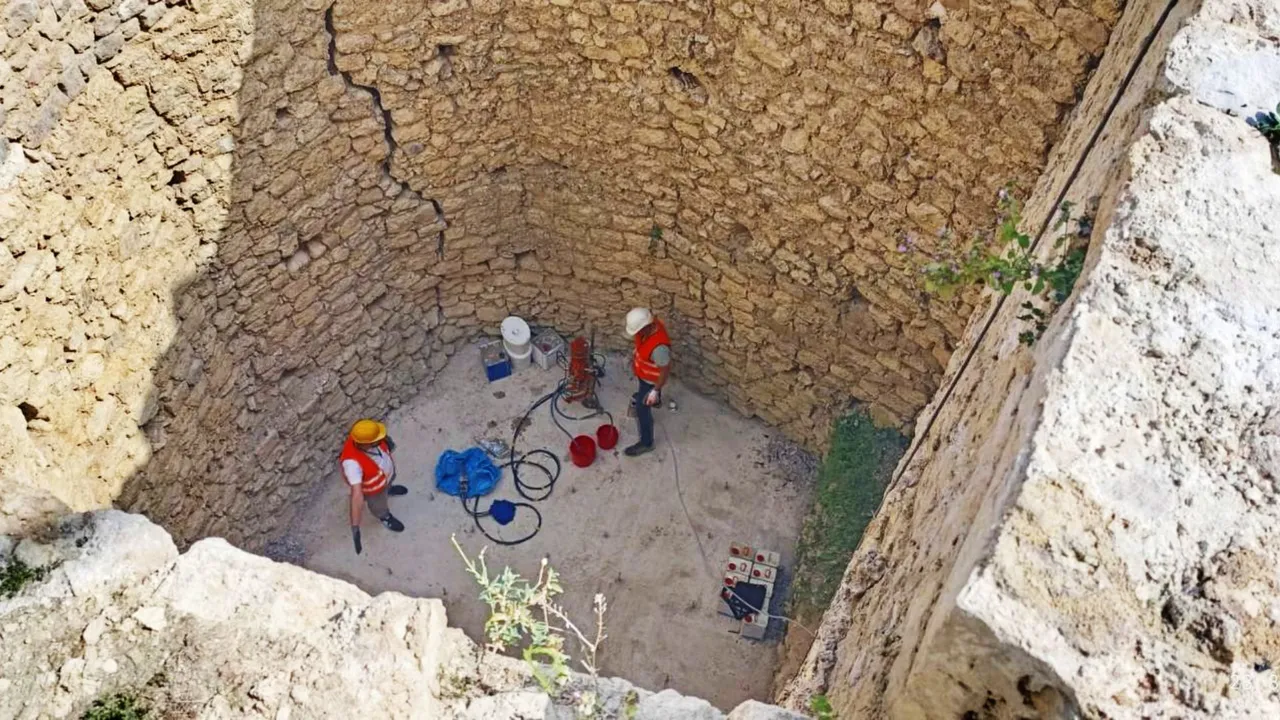
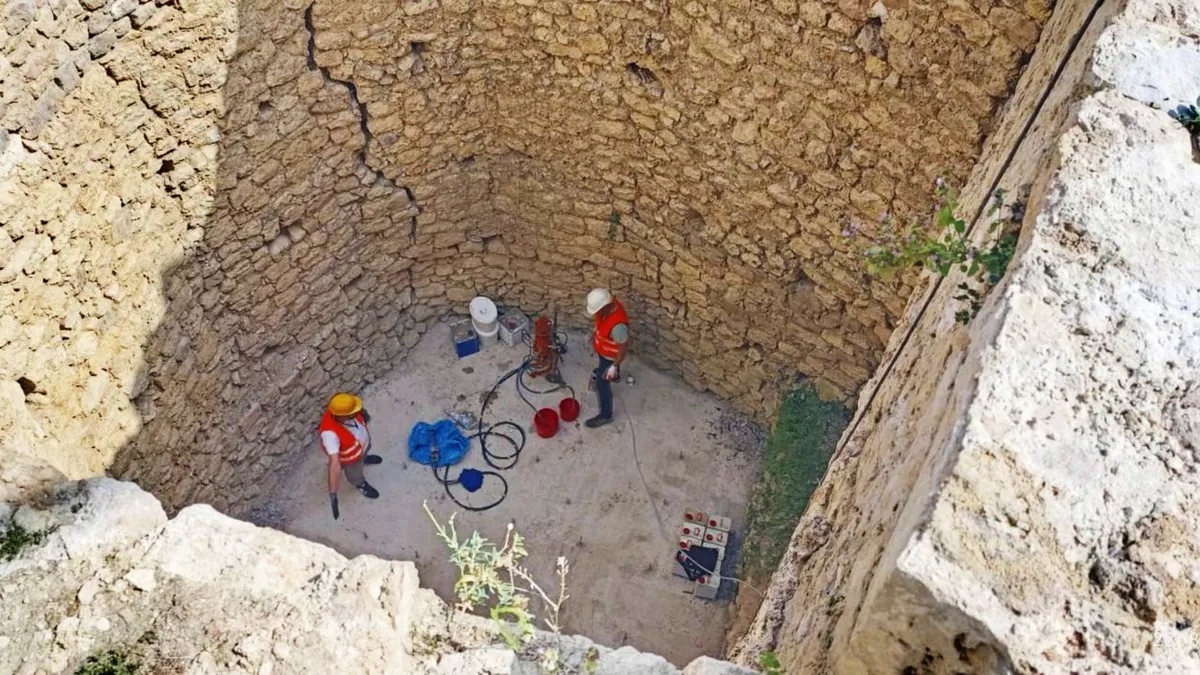
The tower of the historic fortress complex in Gradačac is a landmark of the city. Age-related settlement and inhomogeneous subsoil conditions had led to deformations that threatened structural stability. The aim of the project was therefore to specifically improve the load- bearing capacity of the ground without affecting the historic structure. The soil stabilisation measures were implemented by the construction company Neimari d.o.o. in close coordination with MC-Bauchemie in Bosnia and Herzegovina. From the outset, technical requirements and heritage conservation specifications were given equal priority.
The particular challenge lay in the sensitive existing conditions: the working space beneath the foundation slab was extremely limited, ruling out conventional methods. At the same time, the subsoil consisted of heterogeneous, partially loosely compacted layers that had caused uneven settlement. What was required was a minimally invasive method with the highest precision, controlled material distribution, and rapid effectiveness, one that would provide lasting stabilisation while meeting the tight project schedule.
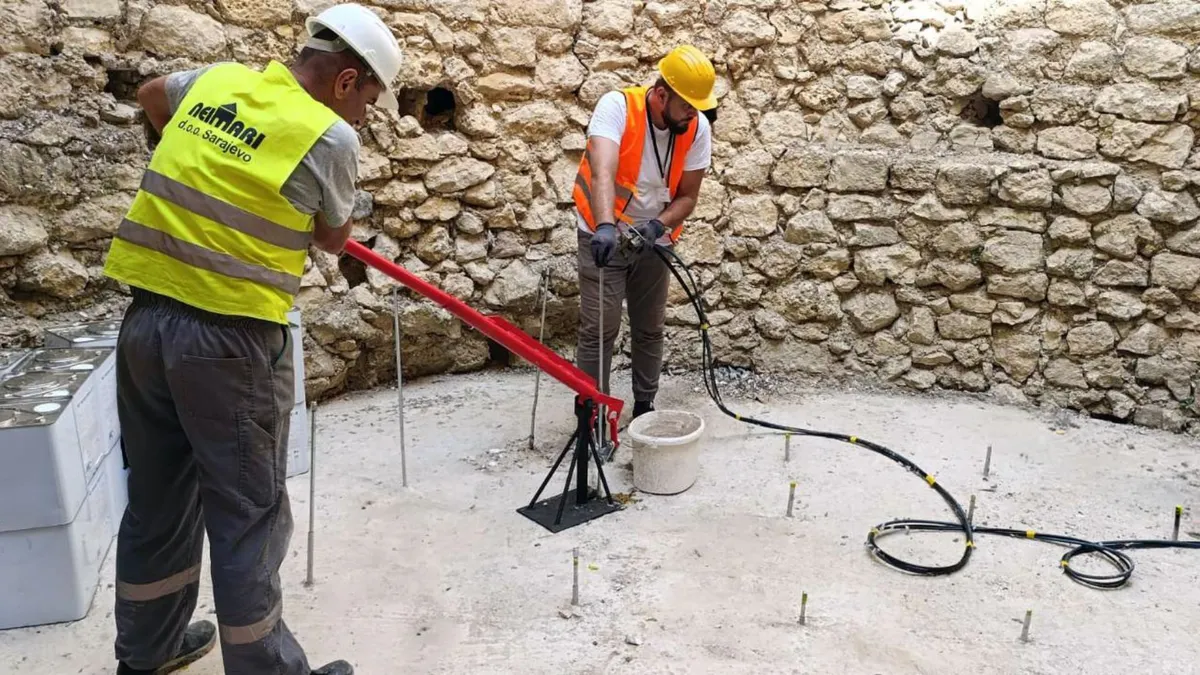
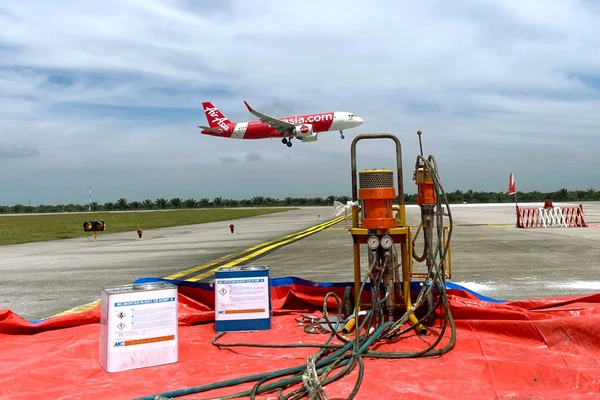
The injection system MC-Montan Injekt FN was used, an environmentally friendly, low-viscosity polyurethane-based duromer resin for rock, foundation soil and civil engineering structures. Thanks to its high flowability, the material penetrates even the finest pores and cavities. Once cured, it forms a homogeneous structure that sustainably consolidates the subsoil and significantly improves its mechanical properties.
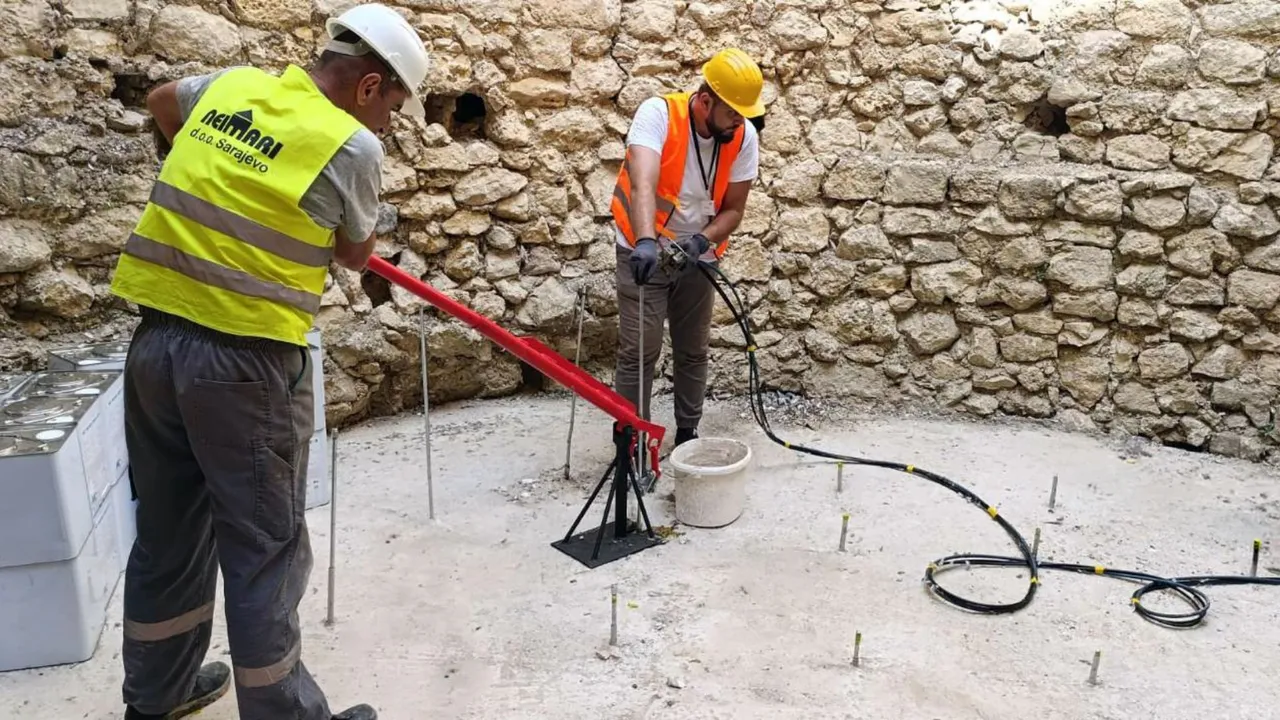
The technical approach was precisely tailored to local conditions. MC-Bauchemie trained the executing personnel in injection techniques to ensure proper implementation. After drilling beneath the foundation slab, injection lances were installed in a defined grid. Injection was carried out to a depth of up to three meters at uniform intervals of 80 cm and a controlled pressure of six bar. A specially matched 2K pump ensured precise dosing and uniform mixing, allowing the material to be introduced exactly into critical soil zones.
As a result of these measures, the mechanical properties of the subsoil improved significantly. The foundation zone of the tower is now permanently stabilised which is an essential prerequisite for the long-term preservation of this culturally significant structure. In a subsequent step, existing cracks in the masonry were structurally secured using stainless steel spiral anchors.
The project serves as an exemplary demonstration of how heritage conservation and modern construction chemistry can be combined: innovative technologies enable the sustainable protection of a historic building structure without compromising its character.
More References
We are continuously improving our website and we use cookies for this purpose. For an optimal user experience, we recommend that you accept them. Otherwise, parts of the page will be deactivated in the display in accordance with data protection regulations.
 Germany
 Austria
 Belarus
 Belgium
 Bosnia and Herzegovina
 Bulgaria
 Croatia
 Czech Republik
 Denmark
 Finland
 France
 Georgia
 Great Britain
 Hungary
 Ireland
 Latvia
 Lithuania
 Netherlands
 Poland
 Portugal
 Romania
 Serbia
 Slovakia
 Spain
Spain
 Sweden
 Switzerland
 Ukraine
 Ethiopia
 Ghana
Ghana
 Egypt
Egypt
 Guinea
 Israel
 India
India
 Kazakhstan
 Malaysia
 Singapore
 United Arab Emirates
 Vietnam
 Taiwan
 Philippines
 New Zealand
 Australia
 Canada
 Brazil
 Chile
Chile
 Bolivia
 Peru
Peru